
Traveling With a Brain Injury: Creating a Calmer, More Comfortable Journey
Travel can be exciting, restorative and full of beautiful experiences—but after a brain injury, it may also require a little more planning.
Crowded airports, unfamiliar environments, noise, changes in sleep, long travel days and packed schedules can sometimes become overwhelming.
As someone who has personally navigated life after a brain injury, I've learned that travel doesn't necessarily have to stop. Sometimes it simply needs to look different.
Slower. More intentional. And with enough space to rest.
Plan Before You Leave
One of the best things you can do is reduce the number of decisions you have to make once your trip begins.
Before leaving, consider preparing a simple checklist with:
Medications • identification • medical information • travel documents • snacks • water • comfort items • chargers • anything you routinely use
If you have medical or accessibility needs, contact the airline, hotel or transportation provider ahead of time.
Your original article actually had good practical advice here, including planning accommodations in advance and keeping necessary medications and medical information accessible.
Give Your Brain Some Quiet
Travel can mean a LOT of stimulation.
Airports. Announcements. Lights. People. Traffic. New surroundings.
Building quiet periods into the day may make traveling more manageable.
Consider bringing:
- Noise-reducing headphones or earplugs
- Sunglasses
- A familiar pillow or comfort item
- A sleep mask
- Water and easy snacks
- A simple itinerary on your phone or paper
And most importantly, don't schedule every minute.
You don't have to see everything on one trip.
Sometimes leaving an afternoon completely open is part of the vacation.
Protect Your Routine Where You Can
Travel naturally changes our routines, but keeping a few familiar habits can create some consistency.
Try maintaining reasonably regular:
Meals • hydration • medications • sleep • periods of rest
Phone reminders can also help if memory or organization becomes more difficult when you're tired.
Create a Familiar Sensory Ritual
This is where aromatherapy can fit beautifully—not as a treatment for brain injury, but as part of a familiar relaxation routine.
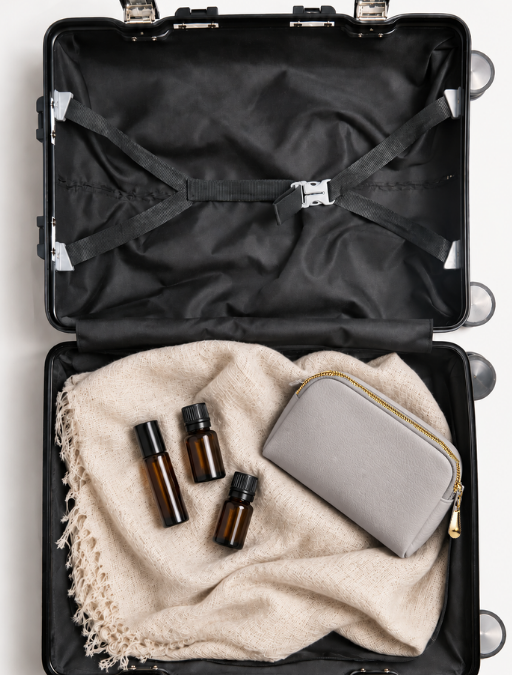
If you already enjoy essential oils at home, bringing one or two familiar aromas may help make an unfamiliar hotel room feel more like your own space.
Some of my favorites include:
Lavender — a soft floral aroma I enjoy as part of an evening ritual.
Frankincense — warm and grounding; beautiful during meditation or quiet reflection.
Peppermint — fresh and invigorating.
You don't need to bring fifteen bottles.
One or two that you genuinely enjoy is plenty.
→ Shop My Favorite Essential Oils
→ Read: 5 Essential Oils for Your Wellness Travel Kit
Be Considerate With Aromatherapy While Traveling
This part wasn't emphasized enough in the original.
Airplanes, trains and other shared spaces are not ideal places for diffusing essential oils because other travelers may have asthma, migraines, allergies or fragrance sensitivities.
Keep aromatherapy personal.
A personal inhaler or another method used according to the product's directions can be much more considerate than filling a shared environment with fragrance.
And always follow airline, hotel and transportation rules.
Give Yourself Permission to Travel Differently
A packed itinerary may work beautifully for someone else and be completely exhausting for you.
Try building your trip around energy rather than expectations.
Maybe you explore in the morning and rest in the afternoon.
Maybe you choose one major activity instead of four.
Maybe you need an extra day after arriving before doing anything ambitious.
That isn't a failed vacation.
That's designing a trip around your actual needs.
What About Yoga & Meditation?
Travel is also a wonderful time to use simple practices that require very little equipment.
A few minutes of:
Deep breathing • meditation • gentle stretching • yoga • quiet time outdoors
can become part of maintaining your normal wellness rhythm away from home.
I personally enjoy incorporating aromatherapy into my yoga practice as part of creating a grounded environment.
→ Read: Yoga & Meditation for Brain Wellness
→ Explore Mindful Living on Pinterest
Listen to Your Body
One of the most important travel skills after brain injury may simply be recognizing when you've had enough.
Rest before you're completely exhausted.
Eat before you're starving.
Hydrate throughout the day.
And don't be afraid to change the plan.
Travel isn't about proving how much you can accomplish.
It's about creating experiences and memories while taking care of yourself along the way.
Explore More
→ 5 Essential Oils for Your Wellness Travel Kit
→ Yoga & Meditation for Brain Wellness
→ Explore Brain Wellness Articles
→ Follow Naturel Vitality on Pinterest
Educational information only. This article does not provide medical advice or treatment for traumatic brain injury. Travel needs following brain injury vary considerably; consult your healthcare or rehabilitation team when appropriate.
Sources & Resources
Brain Injury Association of America. Resources for living with and managing life after brain injury.
Centers for Disease Control and Prevention. Traumatic Brain Injury & Concussion resources.
Transportation Security Administration – TSA Cares. Assistance and information for travelers with disabilities and medical conditions.